
Most homeowners do not check their roof until something goes wrong. A bad storm rolls through. You notice a dark spot on your ceiling. Or a neighbor knocks on your door and points up. By then, the damage has already been sitting there for days or weeks.
Wind damage to your roof is more common than people think. And it does not always look dramatic. You do not need a tornado to lose shingles. A strong thunderstorm can be enough. This guide helps you spot the warning signs, understand what repairs cost, and know how to deal with your insurance company.
Why Wind Damage to Roofs Is Such a Big Deal
Your roof works hard every single day. It keeps the rain out. It holds heat in. It protects everything you own.
When wind gets under your shingles, it starts a chain reaction. A loose shingle leads to water getting in. Water leads to wood rot. Wood rot leads to mold. What started as a $300 shingle repair can turn into a $10,000 mess if you wait too long.
Wind damage is sneaky. The outside of your roof might look mostly fine, while a few shingles in one corner have already lifted. You would never know unless you looked closely or had a professional inspect it.
The best thing you can do is catch it early.
Common Warning Signs of Wind Damage to Your Roof
You do not need to climb up on your roof to start looking for problems. Many signs are visible from the ground or from inside your home.
Missing shingles
This is the most obvious sign. If you can see bare patches on your roof from the driveway, shingles have blown off. Wind usually pulls shingles from the edges, ridgeline, or corners first.
Curling or lifted shingles
Shingles that are curling up at the corners or edges have lost their seal. Wind has gotten underneath and broken the adhesive strip. They have not blown off yet, but they will.
Granules in your gutters
Asphalt shingles are coated with tiny granules that protect against UV rays and weather. After a big storm, check your gutters. If you see a lot of sandy, gritty material, your shingles are breaking down.
Damaged flashing.
Flashing is the thin metal strips around your chimney, skylights, and vents. Wind can bend or pull it loose. When flashing goes bad, water finds a way in fast.
Dented or damaged gutters.
If your gutters took a beating from the wind or flying debris, your roof likely did too. Gutters and roofs face the same conditions.
Debris on the roof.
Branches, leaves, or other material piled up on your roof can hold moisture and cause damage over time. They also point to a windy event that may have done more than just drop debris.
How Much Wind Does It Take to Damage a Roof?
This surprises a lot of homeowners. You do not need hurricane-force winds to damage a roof.
Winds as low as 45 to 55 miles per hour can start lifting shingles, especially on older roofs or roofs where the adhesive seal has already weakened. Most standard residential shingles are rated to handle winds between 60 and 90 miles per hour. High-wind-rated shingles can handle 110 miles per hour or more.
But wind ratings assume the shingles are in good condition and properly installed. If your roof is 15 or 20 years old, those ratings do not mean as much. Age, sun exposure, and previous storm damage all weaken shingles over time.
Straight-line winds from a severe thunderstorm. Downdrafts. Microbursts. These all happen in everyday storm systems and can cause real damage without making the evening news.
How Much Wind Damage to Replace a Roof?
This is one of the most common questions homeowners ask after a storm. The answer depends on how much of the roof is affected.
Partial repair vs. full replacement.
If only a few shingles are missing or damaged, a repair may be enough. If damage is widespread across multiple sections, or if the roof is already near the end of its life, a full replacement often makes more sense.
Factors that affect the cost
The size of your roof matters most. A larger home means more material and more labor. The pitch of the roof also plays a role. Steep roofs take longer to work on and require more safety equipment. The type of shingles you choose affects price significantly.
Getting multiple quotes from licensed contractors helps you understand what a fair price looks like in your area.
Popular Roof Types and How They Handle Wind
Not all roofs stand up to wind the same way.
Asphalt shingle roofs
The most common roof type in the country. They handle moderate wind well when in good condition. Older shingles become brittle and are more likely to crack or blow off.
Metal roofs
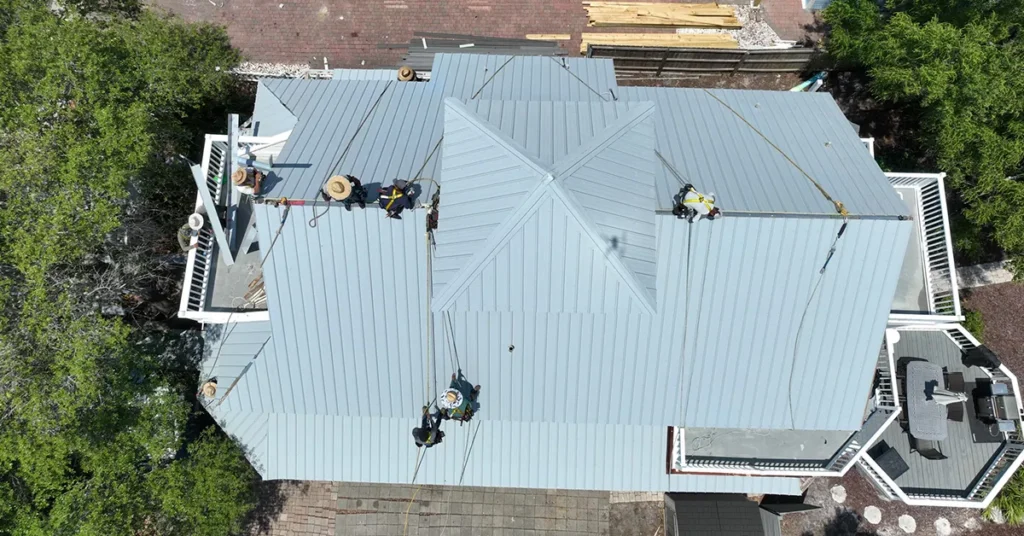
Metal roofs generally perform very well in high winds. They are less likely to lose sections in a storm. They cost more upfront but often last much longer and hold up better in severe weather.
Tile roofs
Clay and concrete tiles are heavy, which helps them stay in place. But individual tiles can crack or chip if hit by debris. The underlayer beneath them can still be damaged.
Flat roofs
Commercial-style flat roofs can develop punctures, tears, or separation at seams during high winds. They require prompt inspection after storms.
Why You Should Use a Professional Roofing Contractor
Some homeowners try to patch their own roofs. It seems simple from the ground. But roofing work is more complicated than it looks.
A licensed contractor brings things that a homeowner cannot easily replicate on their own.
They know local building codes and what permits are required. They can identify hidden damage that goes beyond what is visible. They have the right safety equipment for working at height. They carry insurance, so you are not liable if something goes wrong on the job. They can communicate directly with your insurance adjuster using proper documentation. They provide warranties on both labor and materials.
Wind damage repairs done incorrectly can void your existing roof warranty. They can also lead to more water intrusion down the road. The upfront cost of hiring a professional protects you from much bigger costs later.
Maintaining Your Roof to Prevent Wind Damage
A well-maintained roof handles wind better than a neglected one. Inspect your roof at least once a year and after every major storm. Clear gutters of debris so water flows freely.
Trim branches that hang over the roof. Address small issues like a cracked shingle or loose flashing before they turn into big ones. Check your attic for signs of moisture or daylight coming through.
A healthy roof can last 20 to 30 years with proper care. A neglected one may only make it 10 to 15 before it starts failing.
FAQs
How do I know if my roof has wind damage?
Look for missing shingles, curling edges, granules in your gutters, and water stains on your ceiling. After any storm with winds above 45 mph, a professional inspection is a smart idea.
How much does it cost to repair wind damage to a roof?
Minor repairs can cost a few hundred dollars. Major repairs or full replacements can range from $8,000 to $20,000 or more, depending on roof size, pitch, and materials. Get multiple quotes from licensed contractors.
Does homeowners insurance cover wind damage to a roof?
Most standard homeowners insurance policies cover sudden wind damage. Coverage depends on your policy terms, your deductible, and the age and condition of your roof. Read your policy carefully and document all damage before filing a claim.
How long does a roof repair take?
Minor repairs can often be done in a day. A full roof replacement typically takes one to three days, depending on the size and complexity of the job. Weather and permit timing can affect the schedule.
Should I repair or replace my roof after wind damage?
If your roof is relatively new and damage is limited, a repair may be enough. If your roof is older and damage is widespread, replacement often makes more financial sense. A licensed contractor can help you weigh both options.
Conclusion
Wind damage to your roof is something most homeowners will deal with at some point. The good news is that catching it early and handling it the right way makes all the difference. Know the warning signs. Understand what repairs cost. Work with your insurance company the right way. And choose a qualified contractor who will protect your home for the long haul. Your roof is one of the most important parts of your home. Treat it that way, and it will take care of you for years to come.